Surgicoll-Mesh®
Neurosurgical Application
Implantable, bioresorbable, tissue regenerative sterile Type-I Collagen matrix. Designed for reconstructive surgery, chronic wounds, diabetic ulcers, burns and soft tissue repair.
Neurosurgical Application
Implantable, bioresorbable, tissue regenerative sterile Type-I Collagen matrix. Designed for reconstructive surgery, chronic wounds, diabetic ulcers, burns and soft tissue repair.
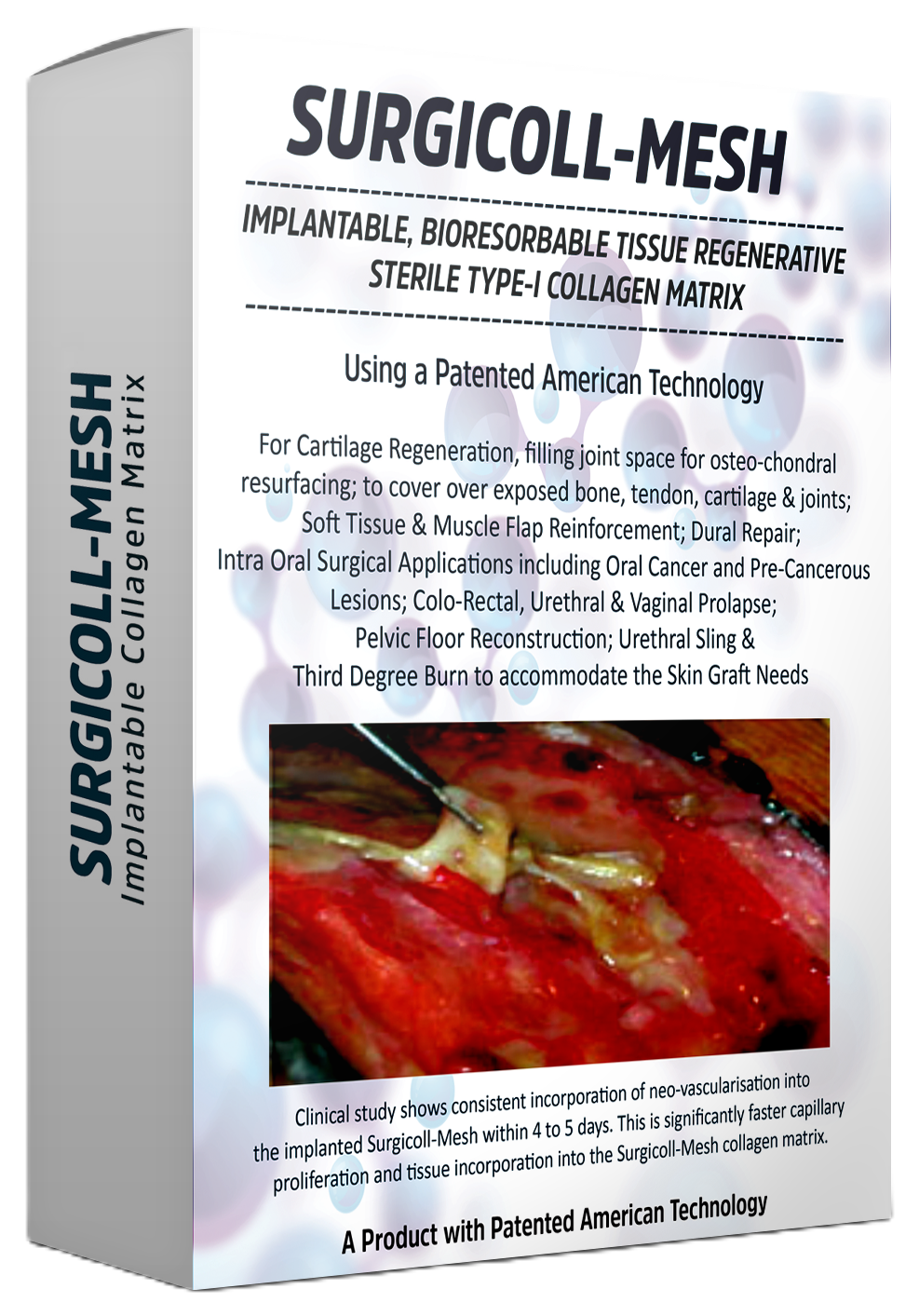
Surgicoll-Mesh® is a bioabsorbable Type-I collagen matrix designed to provide a biocompatible scaffold for soft-tissue repair and reconstruction. Its flexible and conformable sheet configuration enables adaptation to complex anatomical surfaces, supporting its potential use in specialized surgical applications, including dural repair and nerve wrap.
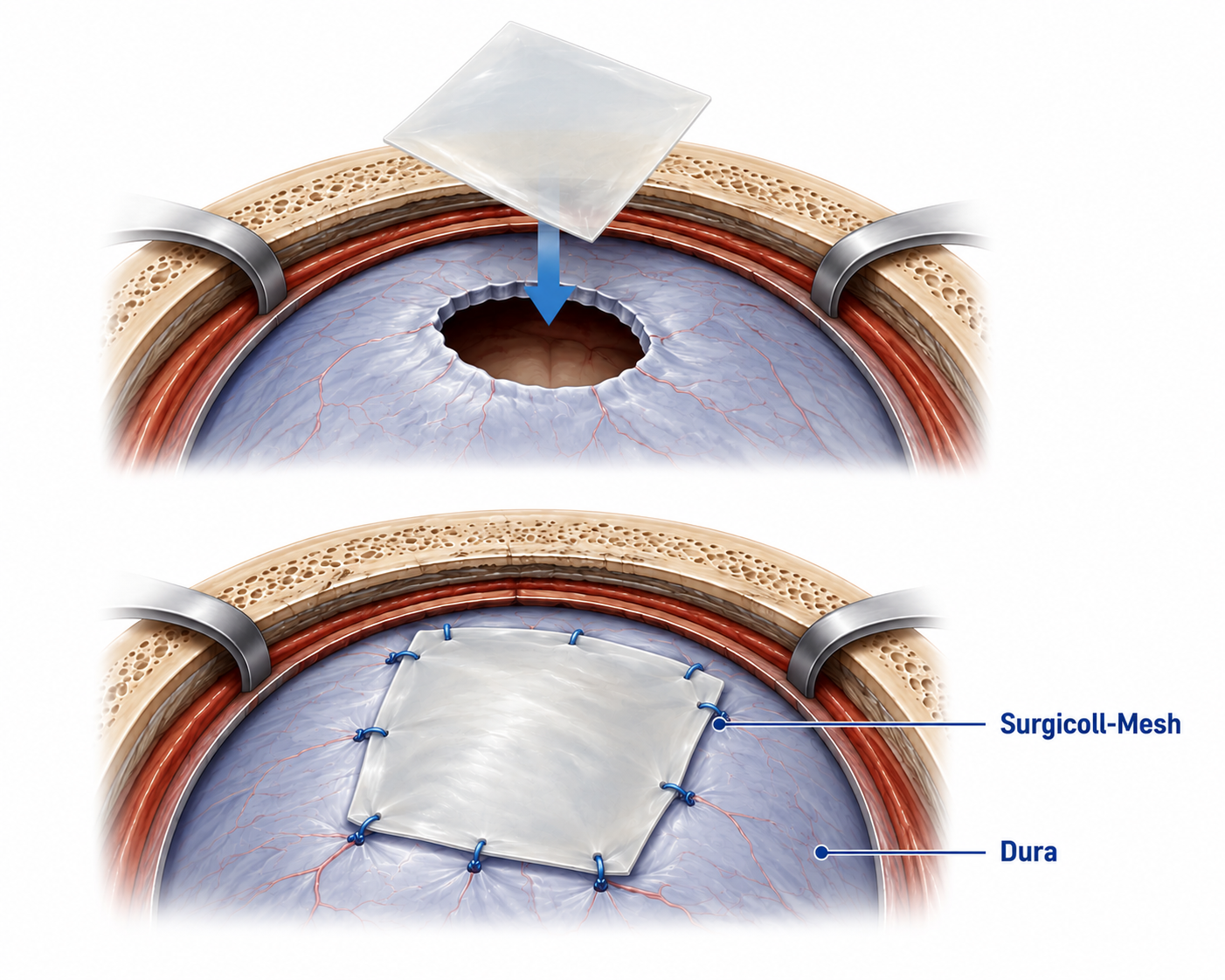
A dural tear is a common but troublesome complication of endoscopic spinal surgery. The limitations of space make repair difficult, and it is often necessary to proceed to an open operation to suture the dura in order to prevent leakage of cerebrospinal fluid1. In dural repair, Surgicoll-Mesh® has the potential to serve as a collagen-based patch for covering and reinforcing dural defects. Its conformable matrix can be positioned over the defect to provide structural coverage while creating a biological scaffold that supports tissue integration and regeneration.
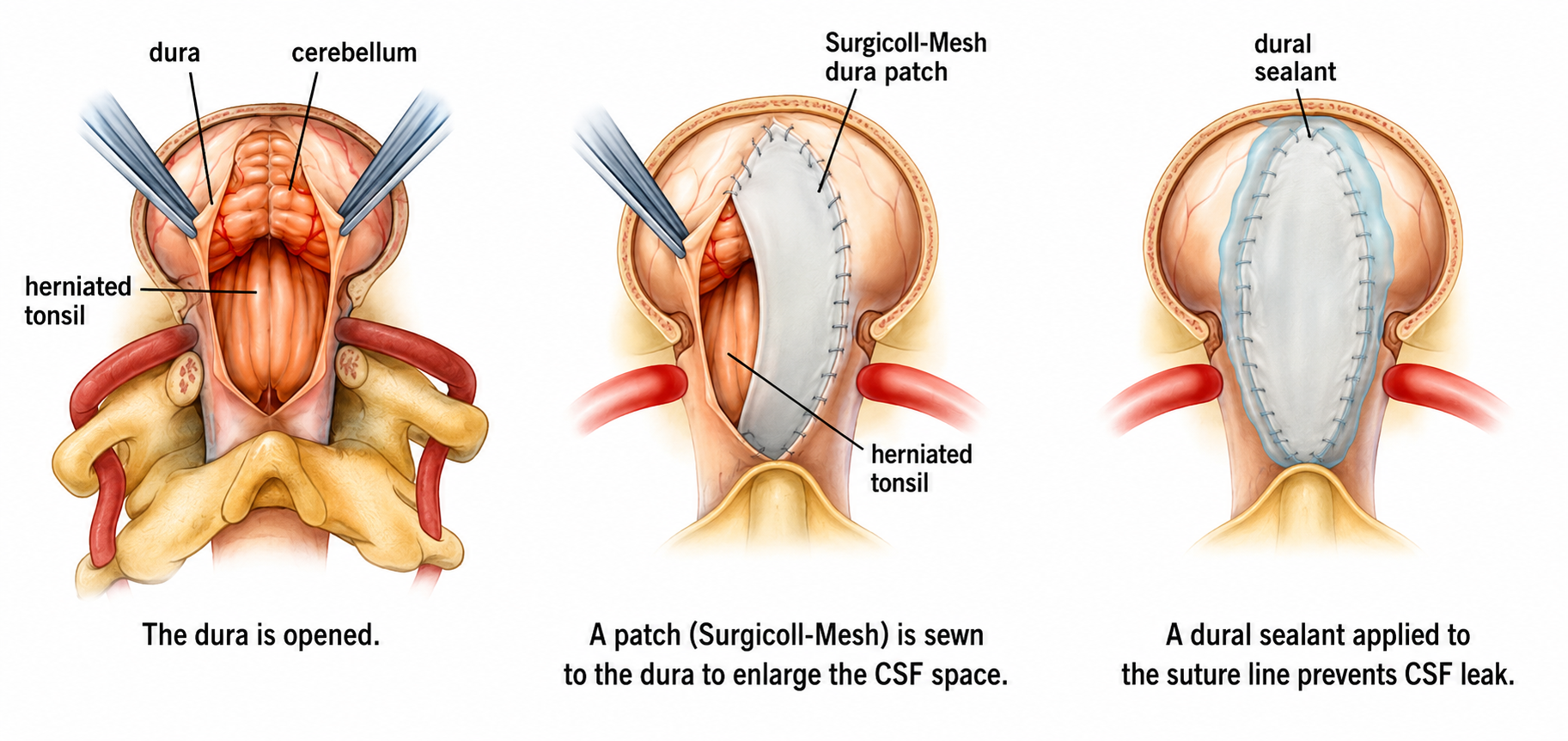
The dura overlying the tonsils is opened, and a Surgicoll-Mesh® patch can be sewn in place to expand the space. The goals of surgery are to stop or control the progression of symptoms caused by tonsillar herniation, relieve compression of the brainstem and spinal cord, and restore the normal flow of Cerebrospinal Fluid (CSF).2
The Surgicoll-Mesh® patch would enlarge the dural opening and increase the space around the tonsils. It should be sutured in a watertight fashion, and the suture line should be covered with a dural sealant to help prevent CSF leakage.
As a nerve wrap, Surgicoll-Mesh® provides a biocompatible, resorbable Type-I collagen interface that may help protect the repair site, reduce adhesion-related fibrosis, and support tissue gliding and functional recovery. Clinical evidence in a Multicentric Randomized Controlled Trial (RCT)3 on extensor tendon repair demonstrates that adjunctive high-purity Type-I collagen wrap can reduce adhesion-related functional limitations and improve early functional recovery.
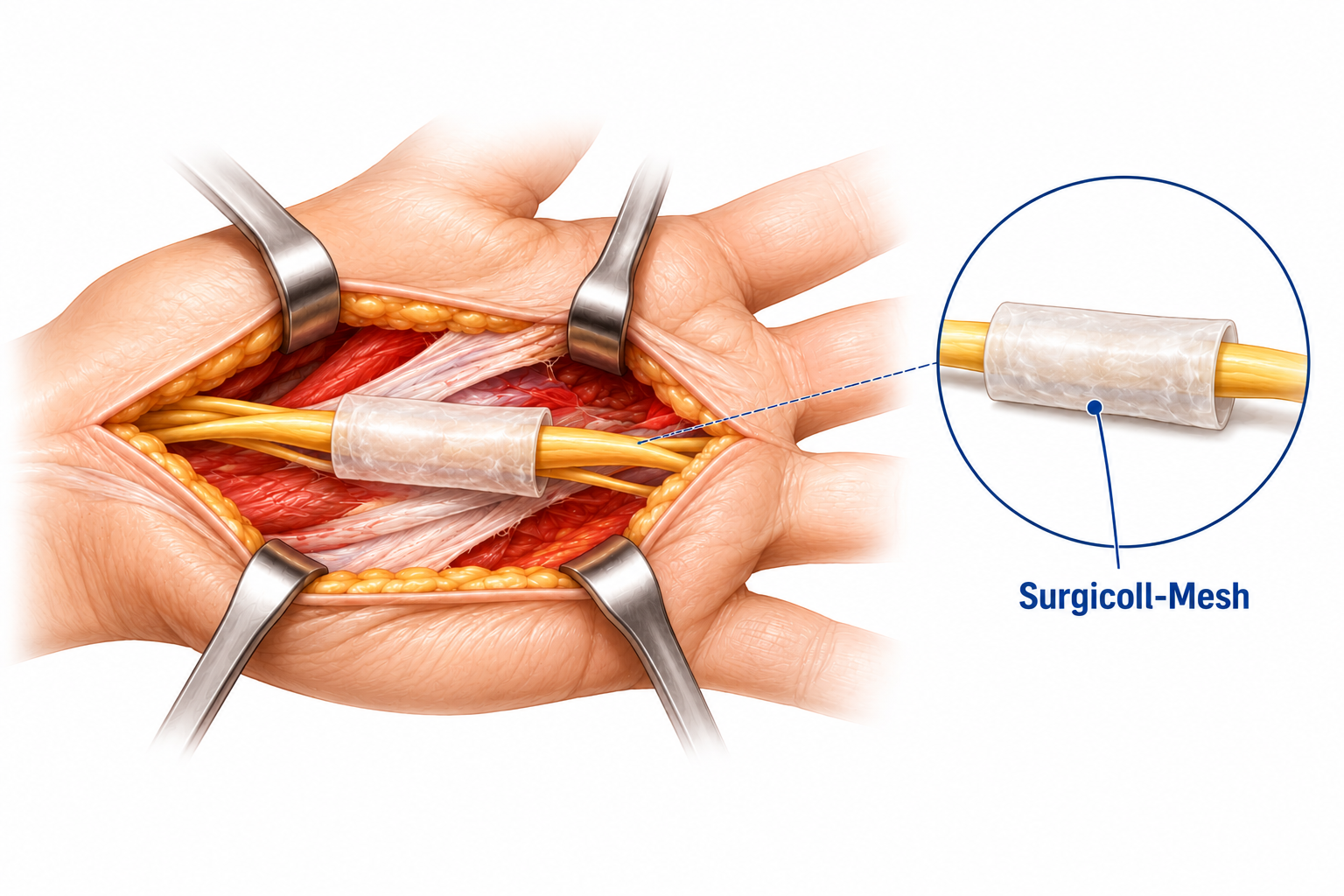
Note: The anatomical site shown in the images is illustrative and may not reflect the actual site of product application. Physicians should exercise their own clinical judgment and professional expertise when using the product.